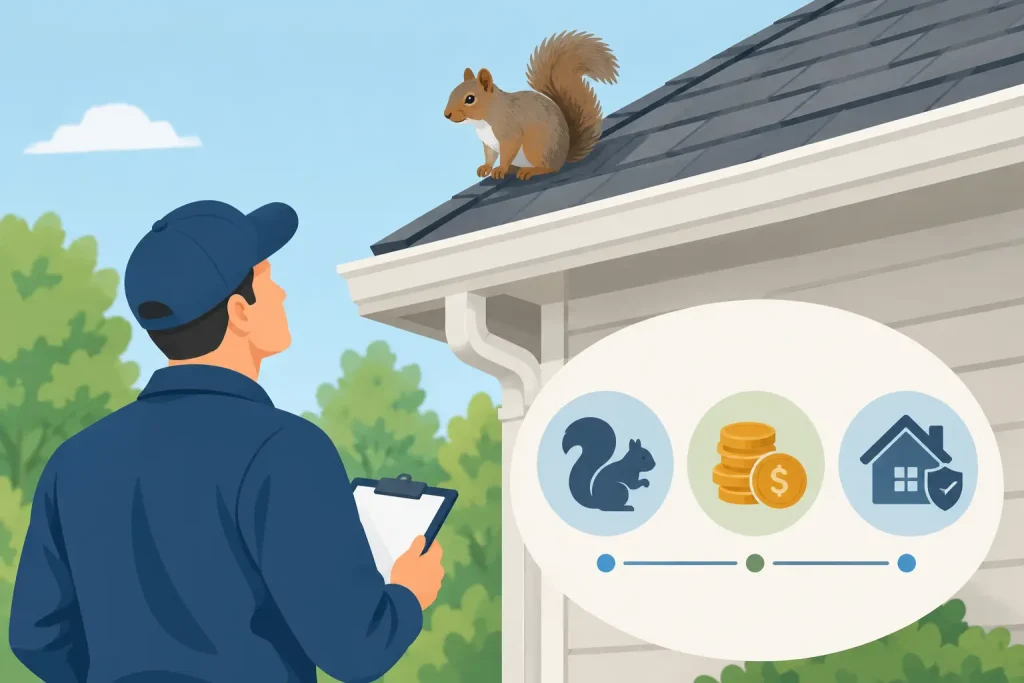
Hearing fast scratching above the ceiling at 6 a.m. is not just annoying. When squirrels enter an attic, wall, soffit, or roofline, they can chew wiring, damage insulation, contaminate stored belongings, and create an opening for future wildlife activity. Squirrel removal cost depends on what is happening at your home and, just as importantly, what it will take to keep squirrels from getting back in.
For homeowners in Rochester, Buffalo, Syracuse, and surrounding communities, a professional solution may range from a relatively simple removal and entry repair to a larger attic restoration project. The right answer starts with identifying the animal, the active entry points, the extent of damage, and whether young squirrels may be present.
How Much Does Squirrel Removal Cost?
A straightforward squirrel removal job often costs several hundred dollars when activity is caught early and access is simple. A complete job involving humane removal, exclusion work, roof or soffit repairs, cleanup, and insulation replacement can range from $1,000 to several thousand dollars.
That spread is not a sign that pricing should be mysterious. It reflects the difference between a squirrel that has just entered through one loose vent and a long-running attic infestation with chewed openings, nesting material, droppings, and damaged insulation. A thorough inspection should explain which conditions apply to your home before work begins.
Homeowners should also be cautious about unusually low quotes that cover trapping alone. Removing one squirrel without sealing the route it used may leave the same opening available to another squirrel, raccoon, bird, or bat. The immediate price may look lower, but repeat visits and new damage can make the final cost higher.
What Affects Squirrel Removal Cost?
The location of the activity
Squirrels are excellent climbers and often use roofs, utility lines, trees, and gutters to reach vulnerable areas. An animal entering through an accessible gable vent is generally less complicated to address than one moving through a narrow wall void or a high roofline with several damaged areas.
Attic access matters, too. A clear, walkable attic allows a technician to inspect nesting sites and insulation more easily. Tight crawl spaces, steep roof work, and hard-to-reach openings can require additional time and safety measures.
The number and condition of entry points
One visible hole is not always the only problem. Gray squirrels can exploit gaps around roof intersections, loose fascia boards, attic vents, chimney flashing, and construction gaps. They may also enlarge weak spots by chewing wood, vinyl, aluminum, or plastic vent covers.
A proper exclusion plan identifies active openings and vulnerable areas nearby. The cost rises when multiple areas need durable repairs, but that work is often what turns a temporary removal into a long-term solution.
Whether nesting season is involved
Squirrels commonly have young in late winter through early spring and again in summer, though timing can vary. If a mother squirrel has babies in an attic or wall, the work must be planned carefully. Separating a mother from dependent young can lead to persistent scratching, odor problems, and animal welfare concerns.
Humane removal during nesting activity may require monitoring, one-way exclusion methods used at the appropriate time, or a tailored plan to reunite young with the mother when possible. This added care can affect the scope and price of service.
Damage, contamination, and restoration needs
Squirrels often tear apart insulation to build nests. They can leave droppings and urine in attic areas, chew stored items, and create fire concerns if they gnaw electrical wiring. If activity has continued for weeks or months, removal is only the first part of the work.
Cleanup and restoration may include removing contaminated nesting material, sanitizing affected surfaces, replacing damaged insulation, repairing vents or woodwork, and addressing chewed structural components. Not every squirrel problem requires all of these services, but an inspection should look for them rather than assuming the attic is fine once the noises stop.
What Should a Complete Squirrel Removal Quote Include?
A useful quote should describe the problem and the remedy in plain language. You should know where squirrels are entering, how active animals will be removed humanely, what openings will be sealed, and what repairs or cleanup are recommended.
The major parts of a complete project can include:
- Inspection of the attic, roofline, exterior, and suspected entry areas
- Humane removal or exclusion of active squirrels
- Repairs and reinforcement of entry points, vents, soffits, and gaps
- Removal of nesting debris and sanitation of affected attic areas
- Insulation cleanup or replacement when contamination or heavy damage is present
Not every home needs every service. For example, a homeowner who notices activity quickly may only need removal and one durable repair. A home with several seasons of activity may need a larger exclusion and restoration plan. The value of an inspection is knowing the difference before choosing a service.
Why Exclusion Work Matters More Than Trapping Alone
Squirrel trapping can remove an animal from a property, but it does not repair the invitation. If chewed soffit material, a broken attic vent, or a gap at the roofline remains open, another squirrel can move in quickly. In some cases, the original squirrel may return if it has not been properly excluded from the structure.
Exclusion is the process of repairing and securing the places wildlife uses to enter. It should be matched to the construction of the home and installed in a way that protects airflow where needed. Covering a vent without considering ventilation, for example, can create moisture issues. This is why wildlife work should account for both animal behavior and the way your house functions.
For many homeowners, the most cost-effective choice is to address removal and exclusion as one coordinated project. It reduces the chances of paying for repeated removal visits while protecting the attic, walls, and roofline from further damage.
Can You Lower the Cost of Squirrel Removal?
The best way to control cost is to act early. Scratching in the attic, thumping near a wall, visible roof activity, shredded vent material, or chewed trim are reasons to schedule an inspection before the damage expands.
You can also help by noting when and where you hear activity. Squirrels are usually active during daylight, especially in the morning and late afternoon. Sharing whether noises are coming from an attic, exterior wall, chimney area, or roof edge helps focus the inspection.
Avoid sealing a hole yourself while you believe squirrels are still inside. Blocking an active animal in a wall or attic can create more damage, odor, and noise. Avoid poisons as well. They can leave dead animals in inaccessible areas and do not solve the structural opening that allowed the problem to begin.
Tree branches touching or hanging over a roof can provide easy access, so trimming them back can be part of prevention. Still, trimming trees alone will not stop squirrels from using an existing opening. Structural repairs remain the key step.
Questions Homeowners Often Ask
Is squirrel removal covered by homeowners insurance?
Coverage varies by policy and by the type of damage. Sudden damage may be treated differently than gradual damage from ongoing wildlife activity. Keep photographs, inspection findings, and repair documentation if you plan to speak with your insurance provider. A wildlife professional can identify visible damage and cleanup needs, but your insurer determines coverage.
How long does squirrel removal take?
The active removal process may be short for a simple situation, but a complete project can take longer if exclusion, repairs, monitoring, or attic cleanup are needed. Nesting season can also affect timing. The goal should be a safe resolution, not a rushed visit that leaves the home vulnerable.
Are squirrels dangerous inside a home?
Squirrels generally want to avoid people, but they can cause serious property damage. Chewed electrical wiring, compromised vents, contaminated insulation, and structural openings all deserve prompt attention. Never attempt to handle a squirrel directly, especially if it is cornered or appears sick or injured.
A squirrel problem does not have to become an expensive, ongoing cycle. Wildlife Control begins with a careful inspection and a clear explanation of what is happening at your home, so you can choose the repairs and prevention work that will bring back a safer, quieter space.