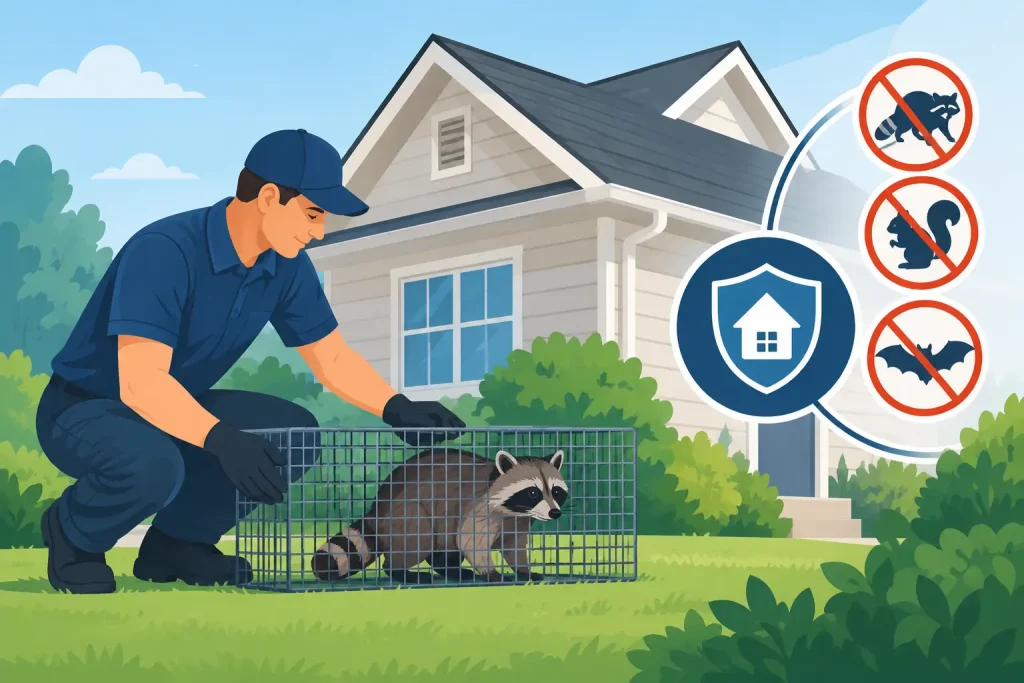
A scratching sound above the bedroom at 2 a.m. is not just an inconvenience. It may be the first sign that an animal has found a way into your attic, wall, chimney, or crawl space. Professional wildlife removal addresses the animal you hear, but it also addresses the opening, damage, and contamination that can turn one unwanted visitor into a recurring problem.
For homeowners across Rochester, Buffalo, Syracuse, and surrounding New York communities, the goal is simple: restore a safe, quiet home without treating wildlife carelessly. That takes more than setting a trap or covering a hole. It takes a clear inspection, humane handling, durable repairs, and attention to the spaces animals leave behind.
What Wildlife Removal Should Actually Solve
Many calls begin with a symptom: thumping on the roof, chirping near a vent, a strong odor, insulation falling from an attic hatch, or scratching behind a wall. The animal may be a raccoon, squirrel, bat, skunk, opossum, groundhog, or another local species. Identifying it correctly matters because each animal behaves differently and requires a different removal and prevention plan.
A raccoon can pull apart roof materials and damage soffits while trying to reach an attic. Squirrels can chew wood, wiring, and insulation, then use the same small gap season after season. Bats may gather in attic voids or wall spaces, leaving droppings beneath their roosting area. Skunks and groundhogs are more likely to create problems under decks, sheds, porches, or foundations.
Removal alone may stop the immediate activity, but it does not necessarily protect the home. If an entry point remains open, another animal can follow the same scent trail or use the same convenient gap. A complete wildlife service should solve four connected problems: safely remove or exclude the animal, locate every meaningful entry point, repair and seal vulnerable areas, and clean or restore affected spaces when necessary.
Start With the Signs at Your Home
Homeowners do not need to identify every animal before calling for help. In fact, guessing based on one noise can lead to the wrong response. What matters is sharing what you have noticed and when it occurs.
Noises during the day often point toward squirrels, while heavy nighttime movement in an attic can suggest raccoons or opossums. Light fluttering or chirping around dusk may indicate bats near rooflines, vents, or attic spaces. Persistent digging, a musky odor near a deck, or small holes along a foundation can point to a skunk or groundhog issue.
Other warning signs deserve attention even when the animal is not visible. Look for torn vent covers, displaced soffit panels, roof gaps, chewed trim, droppings, stained ceilings, damaged ductwork, or insulation that appears flattened, scattered, or contaminated. These signs tell a larger story about where the animal entered and how long activity may have been present.
A careful inspection should include the roofline, eaves, vents, chimney area, siding transitions, attic, crawl space, deck, and accessible exterior perimeter. The goal is not simply to find one obvious hole. It is to understand the full route an animal used and identify weak points that could become the next route in.
Humane Wildlife Removal Is a Process, Not a Quick Fix
Humane wildlife removal means using methods appropriate for the species, the season, and the conditions at the property. It also means avoiding actions that could trap dependent young inside or separate them from a parent. Timing can be especially important for animals using attics and wall voids as denning or nesting sites.
In many cases, exclusion is the best long-term solution. This approach allows an animal to leave through a properly installed one-way device while preventing it from getting back inside. Once professionals confirm the animal is out and there are no young remaining in the structure, the entry point can be permanently secured.
There are situations where removal requires a different approach. An animal in a living space, an injured animal, a raccoon causing active roof damage, or wildlife trapped in a chimney may call for more immediate action. The right method depends on what is happening at your home, not on a one-size-fits-all treatment.
This is also why homeowners should avoid sealing holes as soon as they see them. Blocking an active entry point can trap an animal in the attic or walls. That can create more damage, stronger odors, and a much more difficult situation. A professional inspection helps determine whether an opening is active and how to close it safely.
Exclusion and Repair Keep Animals From Returning
The repair stage is where lasting home protection begins. Animals take advantage of weak or damaged areas, but they can also create their own openings by chewing, pulling, or prying at materials. A repair must be strong enough to resist future activity while still fitting the home properly.
Effective exclusion may involve securing attic vents, reinforcing soffits, repairing damaged fascia, screening chimney openings, sealing construction gaps, fixing roofline damage, or closing access beneath decks and porches. The exact work depends on the animal and the structure. A small gap that admits a squirrel is different from the larger opening a raccoon can exploit, and both require materials suited to the location.
There is a trade-off between a fast patch and a lasting repair. A temporary cover may be useful in an urgent situation, especially when weather is a concern, but temporary work should not be mistaken for complete prevention. The best plan addresses current damage and reinforces vulnerable areas before another animal tests them.
For older homes throughout Western and Central New York, this can be particularly valuable. Settling, weather exposure, aging trim, and previous repairs can leave gaps that are easy to miss from the ground. A thorough exterior assessment helps turn a reactive wildlife call into practical maintenance that protects the home long after the animal is gone.
Do Not Overlook Attic Cleanup and Sanitization
An attic can look undisturbed from the access hatch while hiding contamination deeper in the insulation. Droppings, urine, nesting material, food debris, and damaged insulation may remain after wildlife leaves. Beyond odor, these materials can affect indoor comfort and create an unhealthy environment for anyone entering the space.
Cleanup should be handled carefully. Disturbing droppings or contaminated insulation without the right protective process can spread dust and debris. Depending on the extent of activity, the work may include removing damaged insulation, sanitizing affected surfaces, treating odors, repairing chewed materials, and restoring insulation levels.
Not every wildlife issue requires full attic restoration. A brief, contained event may need limited cleanup and a sealed entry point. A long-term raccoon den or bat roost may call for more extensive remediation. The inspection should explain the condition of the space clearly, so you can understand what is necessary and why.
When to Call for Professional Help
Call promptly if you have an animal inside your living space, repeated activity in an attic or wall, visible roof or vent damage, a bat found in a bedroom, strong unexplained odors, or droppings in an occupied part of the home. These situations are stressful, but they are manageable with the right response.
It is also wise to call before a small issue becomes a costly repair. One squirrel at a roofline can become chewed wiring and damaged insulation. One raccoon entry can become torn shingles, soaked attic materials, and a compromised soffit. Early action usually gives you more options and a clearer path to prevention.
Wildlife Control approaches each home as a complete protection project: inspect the activity, use humane removal methods, secure the structure, repair damage, and help restore affected areas. The purpose is not simply to make the noise stop tonight. It is to help you feel confident that the problem has been handled responsibly.
If something is moving overhead, scratching in the walls, or digging near your foundation, take a moment to note the location and time of day, then arrange an inspection. A safer, quieter home often starts with finding the small opening that made the problem possible.