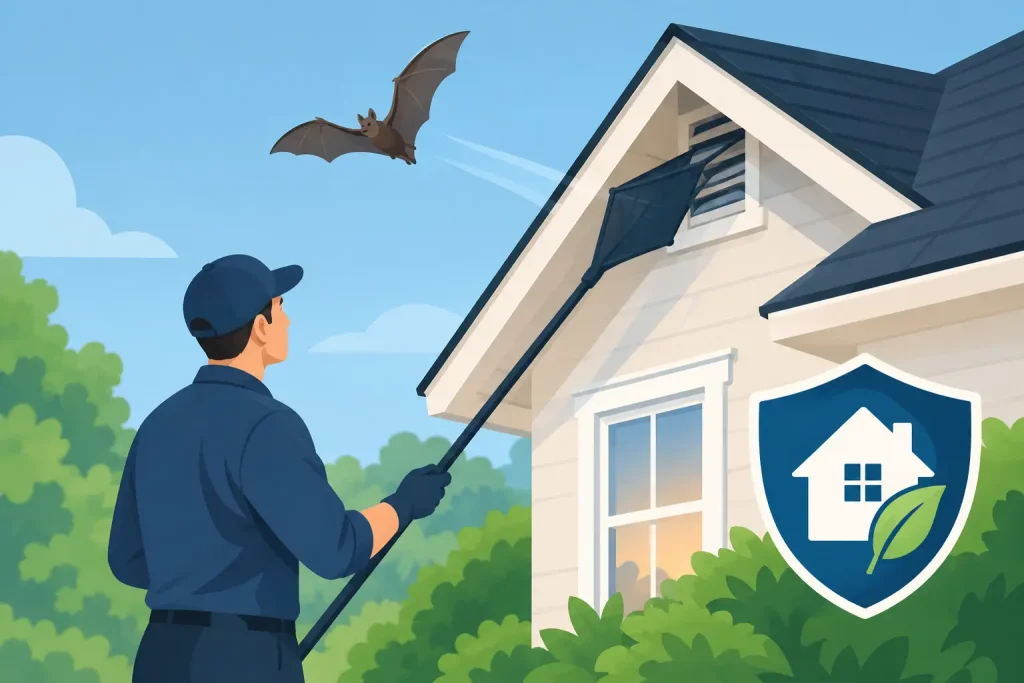
A bat circling a bedroom, droppings below an attic vent, or faint chirping overhead can make a home feel unsettling very quickly. Effective bat removal is not about chasing an animal out of sight. It is about finding how bats entered, getting them out humanely, protecting the people in the home, and closing the gaps that could allow the problem to return.
For homeowners in Rochester, Buffalo, Syracuse, and communities across Western and Central New York, bats often become noticeable when weather changes. A small opening near a roofline, chimney, soffit, vent, or siding transition can be enough for a bat to enter an attic or wall void. What looks like a minor exterior flaw can become a recurring wildlife problem if it is not addressed completely.
What Bat Activity Can Look Like at Home
Bats are quiet compared with many nuisance animals, so homeowners do not always recognize an issue right away. You may hear light scratching, fluttering, or chirping around dusk and dawn. You might see bats leaving from the same area of the roof in the evening, or notice dark staining and small droppings below an exterior opening.
Bat droppings, called guano, are often found in attic corners, along walls, or beneath favored roosting spots. They can resemble mouse droppings at a glance, but the difference matters. A professional inspection helps identify the animal accurately and determines whether bats are using the structure occasionally or have established a roost.
A single bat indoors is also different from a bat colony in an attic. A bat may enter a living space through an open door, chimney, or interior gap after becoming disoriented. That still deserves careful handling, especially if anyone may have had direct contact with the animal. Repeated activity around the roofline or noises from above usually points to an exterior entry issue that needs a more complete solution.
Why Bat Removal Requires More Than a Quick Fix
Sealing a hole before confirming that every bat has left can trap animals inside the structure. That can lead to odor, damage, and bats searching for another way into living spaces. Leaving the opening unaddressed, on the other hand, invites continued access.
The right approach uses exclusion. Professionals identify primary and secondary entry points, install one-way devices where appropriate, and allow bats to exit without being able to return. Once activity has stopped and the structure is clear, those openings can be sealed with durable materials suited to the location.
Timing also matters. Bat behavior changes throughout the year, and there are periods when young bats may not yet be able to fly. Exclusion work must be planned humanely and in line with applicable wildlife rules. A responsible provider will assess the season, the species activity, and the conditions at your home before recommending a method.
This is one reason do-it-yourself bat work can be risky. Expanding foam, caulk, or hardware cloth may seem like an easy answer, but used in the wrong place or at the wrong time, they can make the situation worse. Climbing on a roof, working around damaged soffits, and handling contaminated material also create avoidable safety concerns.
A Complete Bat Removal Process
A reliable solution begins with an inspection, not a guess. The goal is to understand what is happening at your home and build a plan around the actual conditions.
Inspect the roofline, attic, and likely entry points
A careful inspection looks beyond the spot where bats were first seen. Common access points include lifted flashing, roof-wall intersections, gaps around pipes, loose fascia, attic vents, chimney areas, and separations in older siding. Bats can fit through remarkably small gaps, so details matter.
The attic should also be evaluated for droppings, damaged insulation, staining, odor, and other signs of ongoing use. In some homes, bats remain close to an exterior opening. In others, they travel deeper into voids that are harder for homeowners to inspect safely.
Use humane exclusion to clear the structure
After identifying active entry points, a technician can place exclusion devices that let bats leave naturally. The work should be monitored and completed only after the animals have had a chance to exit. The exact time frame depends on weather, bat activity, the design of the home, and seasonal considerations.
This approach protects the home without treating wildlife carelessly. It also prevents the common mistake of simply moving the problem from an attic to a wall cavity or a bedroom.
Seal openings and repair vulnerable areas
Once the structure is clear, exclusion devices are removed and entry points are sealed. Repairs may involve vents, soffits, roof edges, siding gaps, chimney caps, or damaged trim. The best repair work does not merely cover a hole. It strengthens the area so normal weather exposure and animal pressure are less likely to reopen it.
This is where removal-only service often falls short. If the animal is gone but the property is still open, the home remains vulnerable to bats as well as squirrels, birds, insects, and other wildlife.
Clean affected attic spaces when needed
Guano and urine can create odors and contaminate insulation or surfaces, particularly when bat activity has continued for some time. Cleanup needs vary widely. A small, isolated area may require targeted removal and sanitation, while a heavily used attic may need damaged insulation removed and the space restored.
Cleanup should be handled with proper protective measures. Sweeping or vacuuming droppings without the right equipment can disturb contaminated material. A professional can explain what needs to be removed, what can be safely cleaned, and whether attic restoration is worth considering for comfort, air quality, and long-term protection.
What Homeowners Should Do Before Help Arrives
If a bat is in a living area, keep people and pets away from it if possible. Close interior doors to limit where it can travel, and avoid touching or trying to catch it. If there is any chance of a bite, scratch, or direct contact – especially involving a child, pet, or someone unable to describe what happened – contact local public health officials or a medical professional promptly for guidance.
For attic or exterior activity, avoid sealing visible holes yourself. You can make note of where bats are seen entering or leaving, when activity occurs, and whether you have noticed odors or droppings. Those observations can help during an inspection, but there is no need to climb onto the roof or disturb the roost.
Common Questions About Bat Removal
Will bats leave on their own?
They may leave the attic to feed, but that does not mean they have abandoned the structure. If the entry point remains open, bats can return night after night. The solution is to allow them to exit and then prevent re-entry.
Can I seal the hole after I see bats fly out?
Not necessarily. There may be more than one entry point, and not every bat may have exited when you are watching. A full inspection is the safest way to avoid trapping bats inside or overlooking another gap.
How long does bat removal take?
It depends on the number of entry points, the building design, weather, and the time of year. The inspection, exclusion plan, repairs, and any attic cleanup may occur in stages. A clear explanation of those stages helps homeowners know what to expect.
A bat problem can feel urgent, but it is manageable with a calm, thorough response. Wildlife Control helps homeowners move from uncertainty to a safer, quieter home by addressing the animal, the entry points, and the damage left behind. If you are seeing bats near your roofline or hearing activity overhead, an inspection can provide the clear next step your home needs.