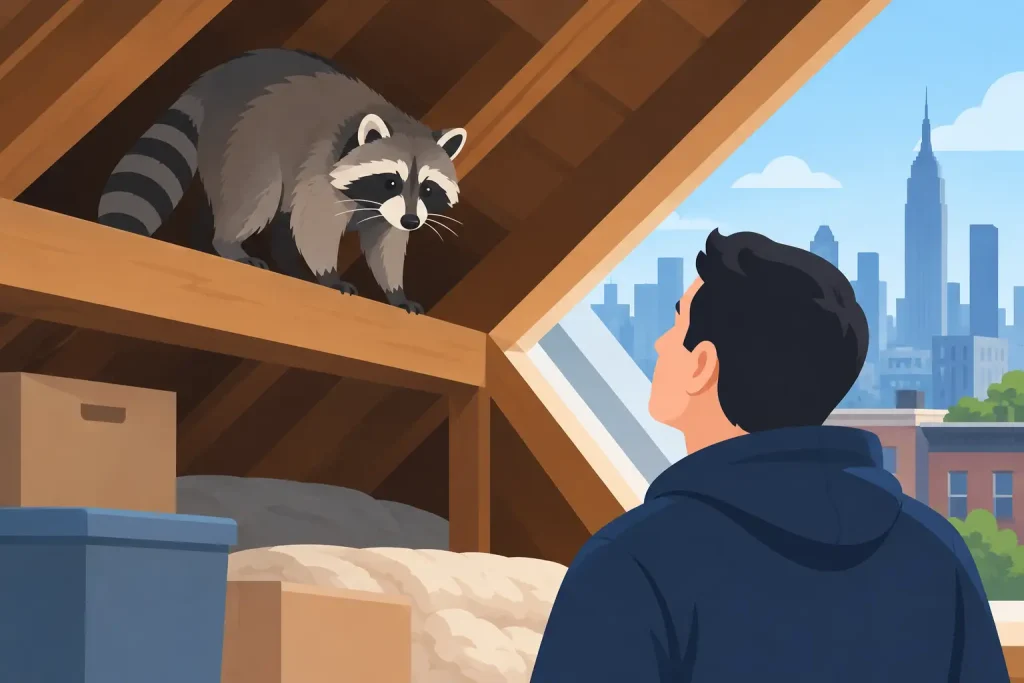
Heavy footsteps above the ceiling at night are unsettling, especially when the sound seems to move from one end of the house to the other. A raccoon in attic is more than a noisy inconvenience. It can tear insulation, damage roof materials, contaminate stored belongings, and create an entry point for other wildlife.
For homeowners in Rochester, Buffalo, Syracuse, and throughout Western and Central New York, the safest response is to protect your household, avoid direct contact, and have the activity inspected before trying to seal or scare the animal out. Raccoons are strong, intelligent, and often more established in an attic than homeowners realize.
Signs You May Have a Raccoon in the Attic
Raccoons are much louder and heavier than mice or squirrels. Homeowners commonly hear distinct thumping, walking, dragging, or scratching sounds after sunset and before sunrise. Noise may become especially noticeable near the roofline, chimney, dormer, or a section of attic directly above a bedroom.
Outside, look for displaced soffit panels, bent roof vents, torn shingles, damaged fascia, or a large opening where the roof meets the home. Raccoons can pull apart weak materials and enlarge an existing gap that once seemed too small to matter. You may also see muddy paw prints, dark smudges around an entry hole, or insulation pulled toward one area of the attic.
Odor is another concern. Raccoon droppings and urine can create a persistent smell that travels through ceiling cavities and HVAC openings. Unlike a minor mouse issue, a raccoon occupation can quickly affect a broad section of insulation and leave waste in more than one location.
Why a Raccoon in an Attic Needs Careful Handling
A raccoon may enter an attic simply looking for shelter, but many attic cases involve a mother with young. In New York, this is often a concern during spring and early summer, although timing can vary. A mother may leave the attic at night to find food while kits remain behind in a nest area. Closing the opening while she is outside can separate the family, leading to frantic damage outside and distressed young animals inside.
That is why a quick repair is not always the right first step. The animal must be identified, the entry route confirmed, and the attic checked for dependent young before exclusion work begins. Humane removal means addressing the full situation rather than creating a new problem behind your walls or ceiling.
There are also health and safety considerations. Raccoons can carry parasites, and any wild animal may bite or scratch when cornered. Droppings should not be swept up or handled without proper protective equipment and cleanup procedures. If you have had direct contact with a raccoon, or if a pet has encountered one, contact the appropriate medical or veterinary professional promptly.
What to Do Before Professional Help Arrives
Keep children and pets away from the attic access and from any visible animal outside. If the raccoon is in a living area, close interior doors to limit its movement, give it a clear route away from people, and avoid trying to trap it yourself.
Do not climb onto the roof, poke into a nest, or block an opening with foam, wood, or a towel. Those actions can force a raccoon deeper into the structure or trap animals inside. Loud music, bright lights, and household repellents may cause temporary movement, but they rarely solve an established attic problem and can make removal more complicated.
A professional inspection should answer a few practical questions: Where is the animal getting in? Is there one raccoon or a family group? What materials have been damaged? Are there secondary gaps that could allow another animal inside after removal? Clear answers help prevent a temporary fix from becoming a repeat infestation.
The Right Process for Raccoon Removal and Repair
Effective raccoon control is a sequence of connected work, not a single trap or patch. The exact approach depends on the season, the condition of the home, and whether young are present, but it generally follows four steps:
- Inspect the home and attic. A detailed inspection identifies entry points, travel paths, nesting areas, contamination, and vulnerable construction around the roofline, vents, chimney, and siding.
- Remove the raccoon humanely. The method should match the situation and comply with applicable wildlife regulations. When young are present, the removal plan needs to keep the family situation in mind rather than leaving dependent animals behind.
- Exclude future wildlife. Once the attic is confirmed clear, damaged openings are repaired and likely entry points are reinforced with durable materials. Exclusion is what keeps a removed raccoon from returning through the same weak spot.
- Restore the affected space. Soiled insulation, droppings, urine damage, and damaged building materials may require cleanup, sanitization, odor treatment, insulation removal, and attic restoration. This step protects indoor air quality and helps return the area to usable condition.
Removal without exclusion leaves the home vulnerable. Exclusion without checking for animals inside can create a worse issue. A coordinated process protects the property at every stage.
Damage a Raccoon Can Cause in Your Home
Raccoons have powerful paws and enough strength to bend vent covers, pull loose soffits, and break through weakened roof edges. Once inside, they may flatten or tear insulation while creating a nest. Urine and droppings can soak into insulation and ceiling materials, making cleanup more extensive than homeowners expect.
Electrical wiring is also worth checking. Raccoons are not as known for constant wire-chewing as squirrels, but wildlife activity in an attic should never be dismissed around electrical systems. Disturbed wires, damaged ductwork, torn vapor barriers, and shifted insulation can all contribute to safety concerns or higher heating and cooling costs.
The repair needs depend on what the inspection finds. A newer home with one damaged vent may need focused exclusion and a small repair. An older home with wet insulation, contaminated areas, and multiple roofline gaps may need more extensive restoration. The goal is not to sell work that is unnecessary. It is to correct the damage that allows the home to remain safe, clean, and protected.
Can You Tell a Raccoon From Other Attic Wildlife?
Sound is a useful clue, but it is not a final diagnosis. Squirrels are often active during the day and may sound like fast scratching or rolling objects overhead. Mice create lighter, smaller noises. Bats may be heard as faint chirping or fluttering near walls, chimneys, or vents.
A raccoon usually announces itself with heavier movement and more forceful scratching, often at night. Still, a professional inspection is the reliable way to identify the species and locate the damage. The wrong solution can miss the animal entirely or seal an active animal into the structure.
Common Questions About Raccoons in Attics
Will a raccoon leave my attic on its own?
It may leave temporarily to feed, but that does not mean it has abandoned the space. If the attic offers a dry nesting area and easy access, the raccoon may return night after night. A mother with young has an even stronger reason to come back.
Is it safe to sleep in a home with a raccoon overhead?
In most cases, the immediate concern is not that the raccoon will enter your bedroom. The greater concerns are property damage, contamination, and the risk of the animal moving into wall spaces or living areas. Arrange an inspection promptly, especially if odors, ceiling stains, or visible damage are present.
How do I prevent raccoons from coming back?
Prevention starts with professional exclusion repairs. It also helps to secure garbage, avoid leaving pet food outside, clean up fallen fruit, and keep roof-adjacent tree branches trimmed where practical. Food management matters, but structural repairs are what stop access to the attic.
A quieter attic can bring immediate relief, but lasting peace comes from knowing why the raccoon got in and that the vulnerable area has been properly repaired. If you are hearing heavy nighttime activity overhead, a timely inspection can turn an uncertain situation into a safer, quieter home.